
Queenstown: Mining History, Art Deco and Trails on Mt Owen
Accommodation in Queenstown
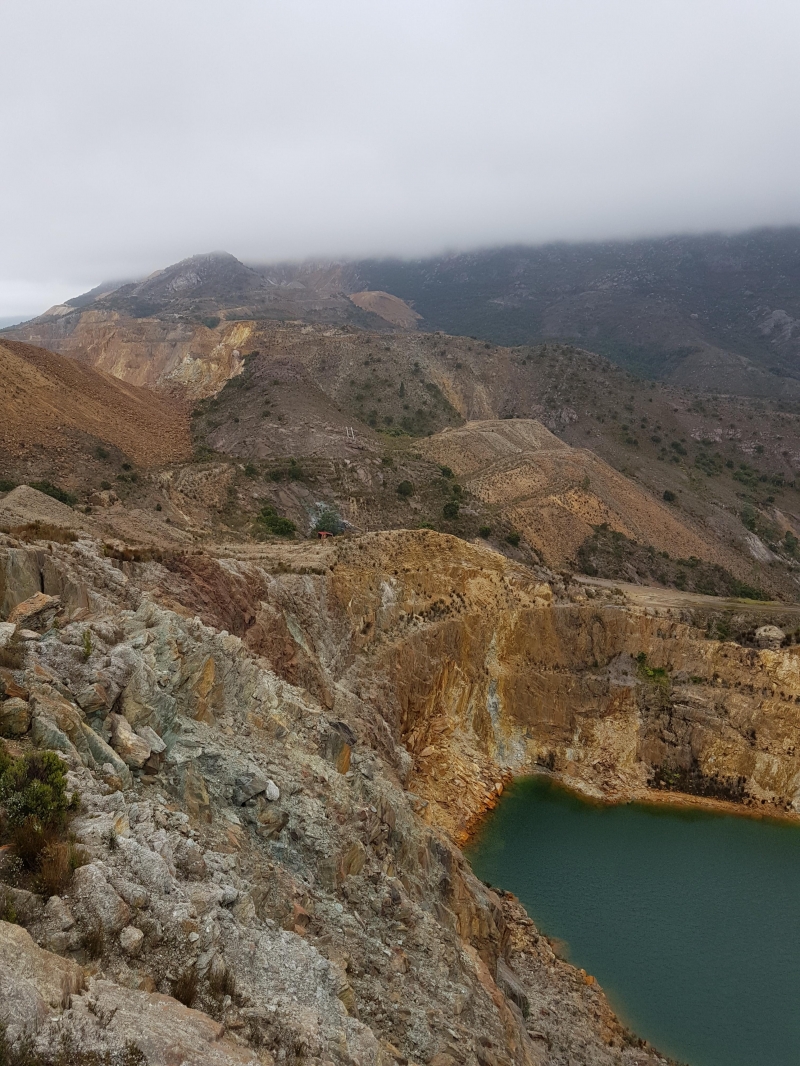
Queenstown lies in a valley between Mount Lyell and Mount Owen. The two mountains give the town a clear geographical setting. The Queen River also connects the landscape with its history: its water is orange, a colour said to be a legacy of more than a century of mining. The industrial past is therefore not just a historical subject; it is also reflected in a feature of the landscape. Queenstown brings together a clear sense of place and mining history in a distinctive setting.
Landscape, trails and an audio experience
The Lower Mountain Trails on Mt Owen can be accessed via the Queenstown Trailhead on Tramway Street. No shuttle is required to get to the top. If mountain biking is important to your trip, you can make these trails a clear focus of your stay.
The location-based audio experience The Singularity takes you through the streets of Queenstown. This offers two distinct options: mountain bike trails on Mt Owen and an audio experience in the town’s streets. When planning your trip, you can choose between an activity on the mountain and an experience focused on the town.
Mining history and architecture
The ABT Railway in Queenstown opened in 1897 to transport copper to Strahan. It is a specific example of the connection between transport and mining history: its purpose is made tangible through a named resource and an explicitly named destination. If you are interested in the industrial past, you can explore this history through a particular railway and its original purpose.
Mining is reflected in two distinct ways: as a legacy in the landscape, visible in the orange water of the Queen River, and in the ABT Railway’s historic role transporting copper to Strahan.
At the Empire Hotel, a different historical detail takes centre stage: the hotel has a staircase made from Tasmanian blackwood, which is listed in the National Trust register. This is not about the purpose of a transport route, but about a single building feature, its material and how it is classified. For architecture enthusiasts, this offers a precise perspective on the building’s history.
The Paragon Theatre was built in the Art Deco style in 1933. The year places the building in time, while the style identifies its architectural character. A self-guided tour, which includes the intact projection room, is also available for a small fee. The tour connects the theatre’s style with a specific detail of cinema technology. It is best to check current visiting hours before you go.
The two cultural sites offer distinct architectural features: the Paragon Theatre is noted for its Art Deco style, while the Empire Hotel is known for its staircase made from Tasmanian blackwood. This makes it possible to explore architecture through both a style and a specific material detail.
Discover more destinations: Ellendale, White Beach, New Norfolk, Conara, Glaziers Bay, Moorina, Queens Domain, Westerway.
For the broader travel guide: Tasmania.
