
Spa: UNESCO Heritage, Springs and Thermal Baths
Accommodation in Spa
Explore Spa through its mineral water, spa history and culture. The town is one of eleven constituent towns of the UNESCO World Heritage Site The Great Spa Towns of Europe. The spa towns in this World Heritage Site developed around mineral springs; their urban layouts combine healing and therapeutic functions with leisure and social life. In Spa, you can encounter these aspects at springs and thermal baths as well as in historic buildings and museums.
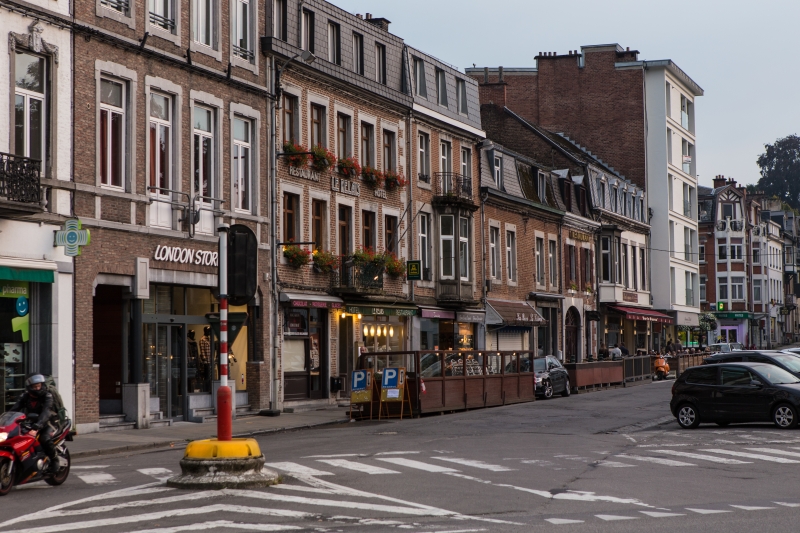
Spa history in the townscape
At Pouhon Pierre le Grand, architecture, spring water and the history of the spa town come together. Victor Besme built the building in 1880. The Pouhon is home to Spa’s most productive spring: its water is naturally carbonated, rich in minerals and high in iron. Interactive exhibits present the town’s history and life in the spa town today. Also on display is the nine-metre-long Livre d’Or by Antoine Fontaine, depicting 92 people who came to Spa for a cure.
Other buildings and sites offer different highlights. Chapelle Leloup dates from 1672 and is considered Spa’s oldest monument. Parc de Sept Heures was laid out as a public promenade in 1758 and contains numerous monuments. At the Church of Notre-Dame et Saint-Remacle, take a look at the organ: it has two manuals, 26 stops and 1,642 pipes. A 1,637-square-metre Pierrot mural, dated to late 2025, covers the Spa Monopole bottling plant opposite Spa railway station.
Thermal baths and springs
Thermes de Spa offers baths filled with 33°C mineral water from the natural Clémentine spring. Admission includes access to 800 square metres of indoor and outdoor pools, as well as saunas, hammams and relaxation areas with Wood’s light and infrared facilities. The offering also includes aquagym and underwater relaxation sessions with a Tibetan singing bowl. Advance booking is strongly recommended for access to the baths and thermal leisure areas; check this recommendation before your visit.
The springs outside the thermal baths also have their own connections to the town’s history and walking routes. Source du Tonnelet has been visited since the early 17th century; its water is rich in iron and carbon dioxide at the spring. Source de Barisart is outdoors and freely accessible. From there, the Promenade Meyerbeer connects the spring to Source de Géronstère via a path lined with cascades. Source de la Sauvenière, also freely accessible, is considered Spa’s oldest spring. It is associated with a pilgrimage tradition said to date back to Saint Remacle; several walking routes start at the spring, including the Promenade d’Orléans. Barisart and Tonnelet are also outdoors and freely accessible.
Another way to learn about the mineral water is to visit the Eaudyssée visitor centre at Spa’s bottling site. It presents the stages of the natural mineral water’s underground journey and offers panoramic views of the bottling lines. As of September 2, 2026, it was temporarily closed for renovation work. Check its current visitor status before travelling.
Museums and nature
The Musée de la Forêt et des Eaux “Pierre Noé” introduces visitors to the natural habitats of the Spa-Bérinzenne region through immersive exhibits. Topics include the Fagne and forests, springs and biodiversity, as well as hiking, forest management and natural mineral waters. The exhibits connect impressions of the landscape with questions about how forests and waterscapes are used and cared for.
A guided nature trail leads from Source de la Géronstère through the forest to Fagne de Malchamps. It includes wooden boardwalks and the observation tower at Domaine de Bérinzenne. The Domaine’s park is freely accessible year-round from sunrise to sunset. Access to the Fagne and the observation tower may be restricted during hunting season or when there is a risk of fire; take this into account when planning your visit.
For insight into the town’s history, the Spa! museum – Musée de la Ville d’eaux offers another point of interest. It is housed in the former Villa Royale, once the residence of Belgian Queen Marie-Henriette, and presents Spa’s history. The Musée de la Lessive traces the history of washing clothes from antiquity to the present day. Together, these cultural themes span the spa town and its mineral springs, everyday history and the landscape.
Discover more destinations: Werbomont, Awans, Neupré, Jevigné, Pepinster, Lincent, Weismes, Vieuxville.
Go to the main travel overview: Liège.
