
Mir: Find hotels for a cultural trip
Accommodation in Mir
For a trip to Mir, the Mir Castle Complex is the clear cultural focal point. It is a UNESCO World Heritage Site and is considered an exceptional Central European castle, combining Gothic, Renaissance and Baroque influences. This gives your choice of destination a specific architectural and cultural focus. However, the complex includes more than the castle itself: landscaped green areas and other buildings are also part of it. So if you are considering Mir as a destination, you can take both its architecture and the different parts of the complex into account when making your decision.
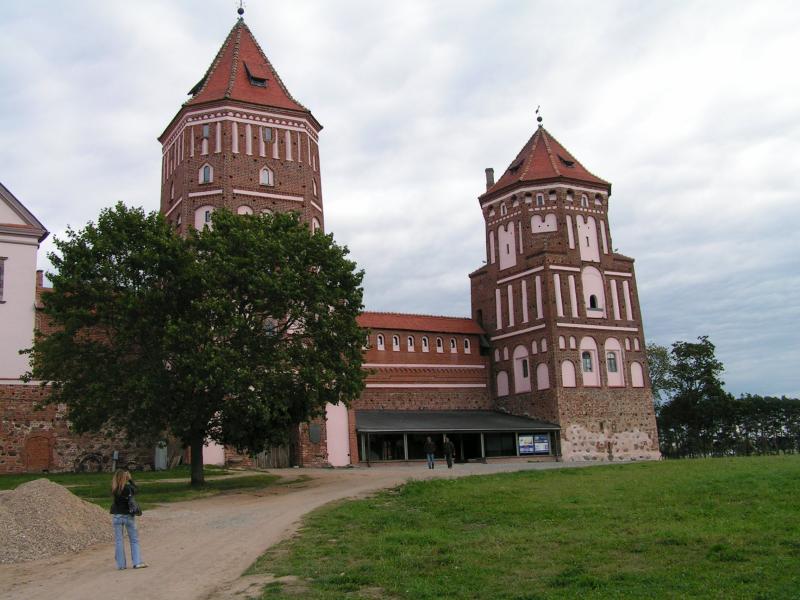
Understanding the castle and grounds
The combination of Gothic, Renaissance and Baroque influences gives the castle a clear architectural focus. If you also choose cultural sites for their architecture, in Mir you can explore three distinct influences together rather than focusing on just one style. This identifies a specific architectural feature that shapes the cultural character of the complex and can help guide your choice of destination.
The complex includes an English landscape park with a pond and the remains of an Italian garden. The two garden features are distinct: the landscape park is English in style, while only remains of the Italian garden survive. The grounds also include earthworks with bastions, a roadside chapel and the burial church of the Princes Sviatopolk-Mirsky. The complex thus brings together landscaped green areas, earthworks and religious buildings alongside the castle.
For your travel decision, the distinction can be summed up as follows: the architectural influences relate to the castle, while the complex also includes landscape and garden areas as well as other buildings. This allows you to think of Mir either in terms of the specific castle or as a more varied cultural heritage ensemble. This distinction is useful when weighing an interest in a single architectural theme against a broader interest in a cultural complex.
Museum and audio guides
The on-site museum offers audio guides in Russian, Belarusian, English, German, Polish and Chinese. The selection therefore includes six languages. This is particularly relevant to your travel planning if you prefer an audio guide in a particular language. The museum’s offering complements the castle’s architectural focus with a specific way to explore the cultural complex in different languages. When choosing your destination, you can therefore take both the architecture and the museum’s multilingual audio guides into account.
Getting there from Minsk
From Minsk, you can reach the Mir Castle Complex via the M1/E30 toward Brest, then take the R64 to Mir. If you are planning your journey from Minsk, you can use this route as a concrete starting point for your planning. The sequence of roads connects Minsk with the castle complex and adds a practical travel note to the information about the site. Before setting off, check the route again based on your current starting point.
Discover more destinations: Belaya.
Go to the main travel overview: Karelichy District.
