
Umbria between nature, water and cultural heritage
Accommodation in Umbria
Umbria combines wooded peaks, valleys with rivers, lakes and waterfalls, and hills dotted with villages and castles. Historic routes cross these landscapes. The region also offers a range of cultural experiences, from Roman architecture and Franciscan heritage to archaeological collections. When choosing where to stay, it can help to first decide which sights and landscapes you want to shape your trip.
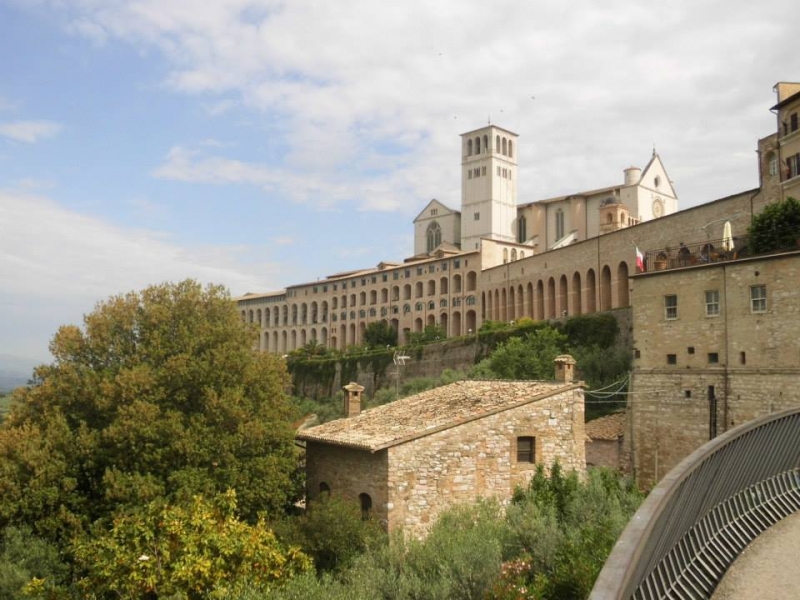
Cultural history in Gubbio, Assisi and Spoleto
At the Roman Theatre of Gubbio, the lower tier of the two-storey arcades and some arches from the upper gallery are still preserved. The cavea, or auditorium, is divided into four wedges. The orchestra, paved with limestone slabs, was used to collect rainwater in a large cistern beneath the pulpitum. Its design and water management make the site interesting for visitors who want to learn about the practical aspects of Roman architecture.
Assisi is a spiritual centre of the Franciscan Order and an important Christian pilgrimage site. The World Heritage Site “Assisi, the Basilica of San Francesco and Other Franciscan Sites” is known for its medieval masterpieces associated with Saint Francis and the Franciscan Order. Here, religious significance and art history go hand in hand.
The National Archaeological Museum of Spoleto spans a period from the Neolithic and Bronze Ages, through the Umbrian settlement phase, to the Romanisation of the city. Monumental inscriptions, fragments of large honorary statues, decorated plasterwork and mosaic fragments illustrate the city’s civic and imperial-era development. The collections thus offer a different focus from Gubbio’s Roman theatre: they explore the city’s development over several periods and the material evidence that has survived.
Lakes, river landscapes and waterfalls
The Regional Park of Lake Trasimeno covers just over 13,000 hectares and includes the islands of Maggiore, Polvese and Minore. The area is of natural, historical and artistic interest. Boat trips go to Isola Maggiore and Isola Polvese. It is worth checking the latest schedules in advance. If you prefer to explore the area on foot, the Via del Trasimeno is an approximately 160-kilometre circular route through the villages in the area. The surrounding hills offer views of the lake.
The Nera River Park stretches along the middle and lower reaches of the river, from Terria to the Cascata delle Marmore. Olive groves on mountain slopes and broadleaf forests shape the landscape; the park’s habitats are also home to trout, birds of prey, wildcats, martens and bats. The Cascata delle Marmore was artificially created in 271 BC by diverting the waters of the Velino into the Nera. It has a drop of 165 metres.
Routes and activities for different travel plans
Rafting, canoeing and kayaking are available in the Nera River Park. There are hiking and trekking trails of varying difficulty, and you can also explore the caves at the Cascata delle Marmore. These activities offer different ways to experience the area, from its waterways to its trails and caves.
Monte Subasio has an extensive network of hiking and trekking trails. Mule tracks and gravel roads are suitable for mountain biking and horse riding; the Via di Francesco also passes through the area. Another caving experience takes you through the Grotta del Monte Cucco. The tour takes two to three hours in total and includes the return journey from Pian di Monte at an altitude of 1,197 metres, as well as the cave visit: through the 27-metre-deep Pozzo Miliani and on to the three large chambers, Cattedrale, Sala Margherita and Sala del Becco. Check booking and access conditions in advance.
Explore on the go and discover local food
Integrated tourist bus and rail services connect historic centres, scenic attractions and airports across Umbria; bus routes are coordinated with train connections at nearby stations. The Bus&Bici Umbria service allows bicycles to be carried on regional buses, including route E401 between Norcia and Spoleto. Check the latest connections and service conditions before travelling.
Culinary experiences include a walk through olive groves followed by a guided tour of an olive oil mill. You’ll learn about the production stages and machinery before taking part in a sensory tasting. Another experience combines a visit to a wine cellar and an old vineyard with a wine tasting accompanied by products from the farm. Reservation and booking conditions may change, so check in advance.
Discover more destinations: Perugia, Terni, Abruzzo, Tuscany, Lazio, South Tyrol, Emilia-Romagna, Sardinia.
Go to the main travel overview: Italy.
