
Discover Wolgast: Churches, museums and trails
Accommodation in Wolgast
Wolgast brings together several historical perspectives: church architecture, Pomeranian residence history, seafaring and trails with religious connections. When planning your trip, it may help to distinguish between these themes: Would you like to look out over Wolgast, explore its architectural history, or discover the town and its surroundings along different routes? Museums and monuments add insights into regional art and maritime history to the mix.
Churches, views and the Jerusalem Way of the Cross
St. Peter’s Church is a three-aisled brick basilica dating from the 14th century. Its crypt is the burial place of the last Pomeranian dukes. Visitors can climb the church tower via 184 steps and look out from a height of 40 metres across Wolgast to the island of Usedom. The church thus combines views of the town with its architectural and regional history.
St. Gertrude’s Chapel is another example of architecture. This 12-sided brick building from the 15th century has a central pillar and a star-vaulted ceiling. Of the more than 30 St. Gertrude’s chapels originally found in Pomerania, only four remain today; the Wolgast chapel is the only one in Germany. St. Peter’s Basilica and the chapel differ both in their architectural design and in their histories.
The two sites are linked by the Jerusalem Way of the Cross, which leads from St. Peter’s to St. Gertrude’s Chapel, a replica of the Holy Sepulchre. The route was modelled in the 15th century by Duke Wartislaw IX of Pomerania after a journey to Jerusalem. It is considered a 1:1 replica of the Way of the Cross in Jerusalem and is about one Roman mile long. The route connects religious history with two distinct buildings in Wolgast.
Routes with different connections
The Hanseatic Route also passes through Wolgast: its section comes from Greifswald, runs through Buddenhagen and Hohendorf and crosses the town before continuing to the island of Usedom. Wolgast is also on the Baltic Sea Cycle Route, the Way of St. James and the E9. When planning, it is useful to distinguish between them: the route of the Hanseatic Route through several places is specified here, while the other routes are listed as also passing through Wolgast.
Museums and town history
At the Wolgast Town Museum, you can view a digital reconstruction of the former ducal palace. The “Kaffeemühle” (Coffee Mill), the town museum, traces Wolgast’s development across four floors, from a Pomeranian residence town to a modern shipbuilding centre. Both perspectives tell the story of the town, but focus on different aspects: the reconstructed palace in one case, and broader development across several floors in the other.
Wolgast’s Historic Town Hall took its present form in the early 18th century. Another way to explore cultural history is to visit the birthplace of painter Philipp Otto Runge, who died in 1810. A museum dedicated to his life and work opened there on 23 July 1997, on what would have been his 220th birthday. The Town Hall, town museum and Runge Museum thus represent different historical and artistic themes.
Seafaring, the harbour and outdoor attractions
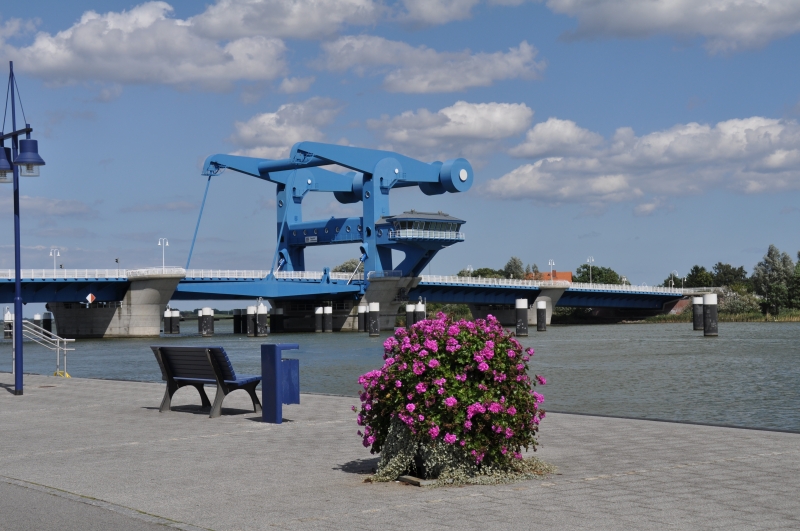
The listed steam railway ferry “Stralsund” was built at the Schichau shipyard in Elbing and entered service on 20 October 1890, commissioned by the Royal Prussian Railway Engineering Office. It is considered Europe’s oldest steam railway ferry; guided tours are offered on board. If you would like to plan a tour, it is a good idea to check the latest dates in advance. Wolgast Museum Harbour is located on the so-called Schlossinsel (Palace Island) in the Peenestrom.
A collection is on display in the small Mühlenstein Park on Dr.-Theodor-Neubauer-Straße, where it can be viewed free of charge. It includes prehistoric and modern millstones and was established in the late 1980s. North of Wolgast town centre, the Dreilindengrund bathing area is located on the Peenestrom. It has bicycle parking, play facilities and a barbecue area. If swimming is important to your plans, check the latest information on bathing suitability in advance.
Discover more destinations: Sauzin, Buggenhagen, Lassan, Lütow, Krummin, Zemitz.
Back to the main travel overview: Amt Am Peenestrom.
