
Discover Usedom: Nature Park and Town History
Accommodation in Usedom
Usedom combines Nature Park themes with local history. When choosing a hotel, you can first consider whether you would rather focus on the Nature Park exhibition and a guided cycling tour, or on the historic sites. There are specific points of interest for both: the Nature Park information centre, Schlossberg hill and Anklamer Gate.
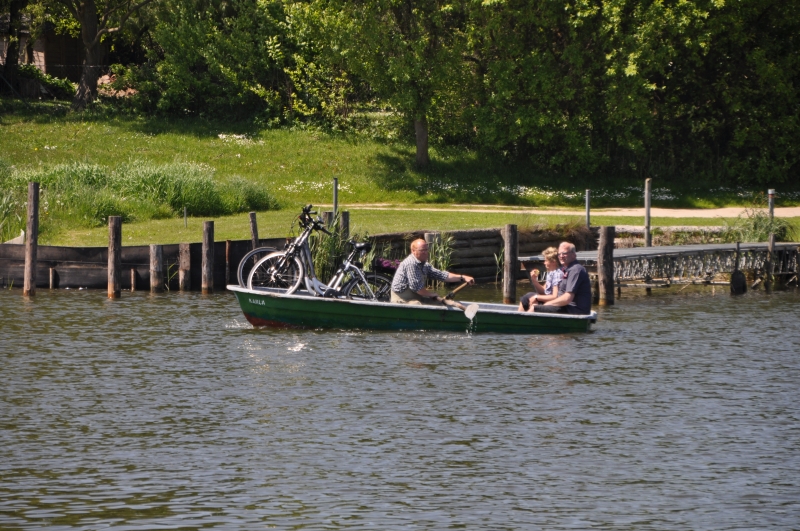
Nature Park and guided cycling tours
The Nature Park information centre is housed in the restored former railway station building in the town of Usedom, the Klaus Bahlsen House. The visitor information centre for the Usedom Island Nature Park presents a modern exhibition about this unique natural environment. Guided Nature Park cycling tours are also offered in Usedom, giving visitors the chance to explore the island with an expert guide. The exhibition and the cycling tour explore the natural environment in different ways: one through a presentation, the other through a guided cycling experience. Tours and routes may be seasonal; check current dates before planning.
Schlossberg hill and Anklamer Gate
The castle on Schlossberg hill was first mentioned in historical records in 1140 and was later expanded into a ducal palace. In 1928, on the occasion of the anniversary of the Christianisation, a stone Latin cross with an inscription plaque was erected on Schlossberg hill, which is about ten metres high. These are two distinct historical points of reference: the documented mention of a castle and its later expansion, and a specific memorial. The cross commemorates the occasion of the Christianisation celebration in the town’s history.
Anklamer Gate is the only surviving one of Usedom’s three former town gates: Peen Gate, Swine Gate and Anklamer Gate. The local history room inside Anklamer Gate documents the everyday lives of Usedom’s farmers and fishermen and displays historical exhibits. One room is dedicated to Albert Köster, a painter and photographer from Usedom. The local history room thus brings the lives of farmers and fishermen together with the story of an individual artist. This perspective on everyday life and art complements the architectural history visible at Schlossberg hill and the surviving town gate.
Vorpommern-Greifswald in a broader context
The wider travel destination of Vorpommern-Greifswald offers further cultural and cycling themes. The Pomeranian State Museum in Greifswald displays the Croy Tapestry from 1554, a unique cultural and historical artefact from the Reformation period. This is a different way of exploring cultural history from Usedom’s local history: here, the focus is on a single artefact from the Reformation period, while in Usedom it is on the development of the castle, the memorial cross and the themes presented in the local history room.
Cycling can also be considered at a regional level. The Baltic Sea Cycle Route, part of the EuroVelo EV10 route, passes through the district of Vorpommern-Greifswald. The Stettin Lagoon Loop and the Route of North German Romanticism are among the regional cycling routes for exploring the district. This gives you different points of reference for planning: the guided Nature Park tour in Usedom and cycling routes across the district. Route conditions and signage may change; check the latest information before setting out.
Discover more destinations: Korswandt, Garz, Koserow, Zempin, Loddin, Kamminke, Mellenthin, Benz auf Usedom
View the wider travel overview: Amt Usedom-Süd.
