
Discover Saint Petersburg: Architecture, Museums and History
Accommodation in Saint Petersburg
Saint Petersburg combines a waterside cityscape with historic streets, buildings and museums. When planning your stay, you can focus on different themes: the architecture of the historic centre, collections of Russian art, or the history surrounding Peter the Great. The sights tell the story of different eras and can be explored according to your interests.
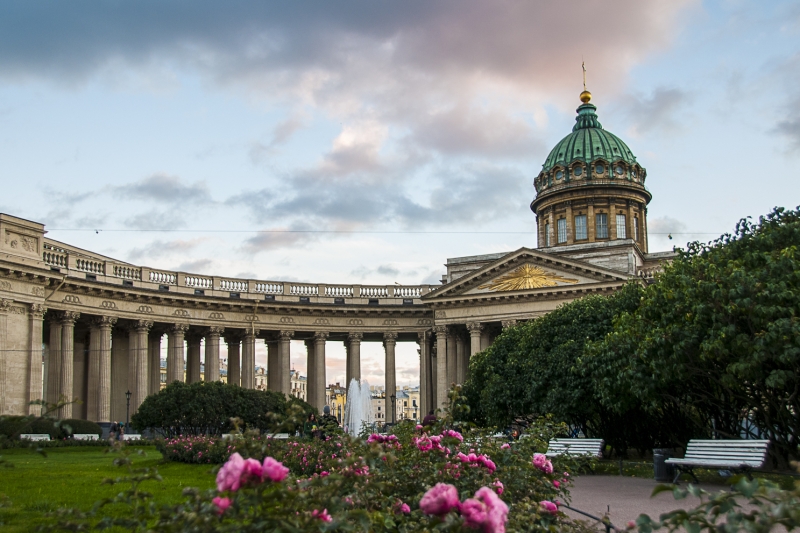
Cityscape between the Neva, canals and streets
Saint Petersburg’s cityscape rises at the mouth of the Neva, where the river meets the Gulf of Finland. In the historic centre, the interplay of architecture and waterside scenery defines the city’s character. The network of canals, streets and quays took shape gradually from the reign of Peter the Great (1682–1725). The waterways and streets are therefore not separate chapters, but parts of the historic urban fabric that grew together.
Nevsky Prospect did not become the city’s main east–west axis until 1738. A walk along the avenue takes you past tall buildings that embody the spirit of Peter the Great’s city. The 6th and 7th Lines on Vasilievsky Island offer a different urban perspective: there, they form a street partly designated for pedestrians. When planning your days, you can take in these varied impressions alongside the museums and historic buildings.
Buildings and the history of Peter the Great
St Isaac’s Cathedral is Saint Petersburg’s largest Orthodox church and a remarkable example of late Classicist architecture. Its design also features Neo-Renaissance, Byzantine and eclectic elements. This single building shows how several styles can coexist within the city’s history.
The Peter and Paul Fortress was founded by Peter I in 1703 and is considered a monument to fortification architecture from the 18th to the 20th century. The complex contains the Peter and Paul Cathedral, a monument of Petrine Baroque architecture and Saint Petersburg’s oldest church. On a guided tour, visitors can climb the bell tower and enjoy panoramic views of the city from a height of 43 metres. The fortress grounds and its beach are also open for independent visits. Part of the underground passageways can be visited; the entrance to a postern is in the Tsar’s Bastion. Check in advance which visits are currently available for the guided tour and underground passageways.
Museums and collections
The Russian Museum is considered the world’s largest museum of Russian art. Its collection comprises more than 450,000 exhibits and spans Russian art from the 10th to the 21st century. The main retrospective is housed in the Mikhailovsky Palace and the Benois Wing. The museum is also an architectural and artistic complex in the historic centre, bringing together significant monuments of palace architecture and garden and park art. The collection and its architectural setting thus offer two different ways to explore art and urban history.
The Menshikov Palace is considered Saint Petersburg’s first stone building and was built in the Petrine Baroque style. It was built for Alexander Danilovich Menshikov, a confidant of Peter I and Saint Petersburg’s first governor. The palace houses an exhibition on the history and culture of Russia during the time of Peter the Great; check whether access is currently available before your visit. The Kunstkamera, meanwhile, is the successor to Russia’s first state public museum, founded by Peter I in 1714. Together, these two sites offer different historical perspectives on the early city.
The museum “Anna Akhmatova. Silver Age” has nine exhibition halls, including rooms titled “Requiem,” “Komarovo” and “Poem without a Hero.” There is also a lecture and concert hall. The Hermitage Theatre was built between 1783 and 1789: Giacomo Quarenghi designed it for Catherine II on the site of Peter I’s former Winter Palace. These examples range from literature and Russian art to theatre architecture.
The Summer Garden and the royal court
The history of the Summer Garden also brings together urban planning and court life. In 1704, Peter I had a large garden laid out for himself, modelled on the well-known Western European parks of the time; he designed the first plan himself. Just a few years after it was created, the Summer Garden became a centre of political and official life, as well as court ceremonies and celebrations. This development adds the garden’s former role in public and court life to the perspective on the city’s stone buildings.
This question can help you plan your sightseeing and stay in Saint Petersburg according to your interests.
Discover more destinations: Peterhof, Repino, Strelna, Komarovo, Pavlovsk, Olgino, Sestroretsk, Solnechnoye.
Back to the main travel overview: Saint Petersburg.
